
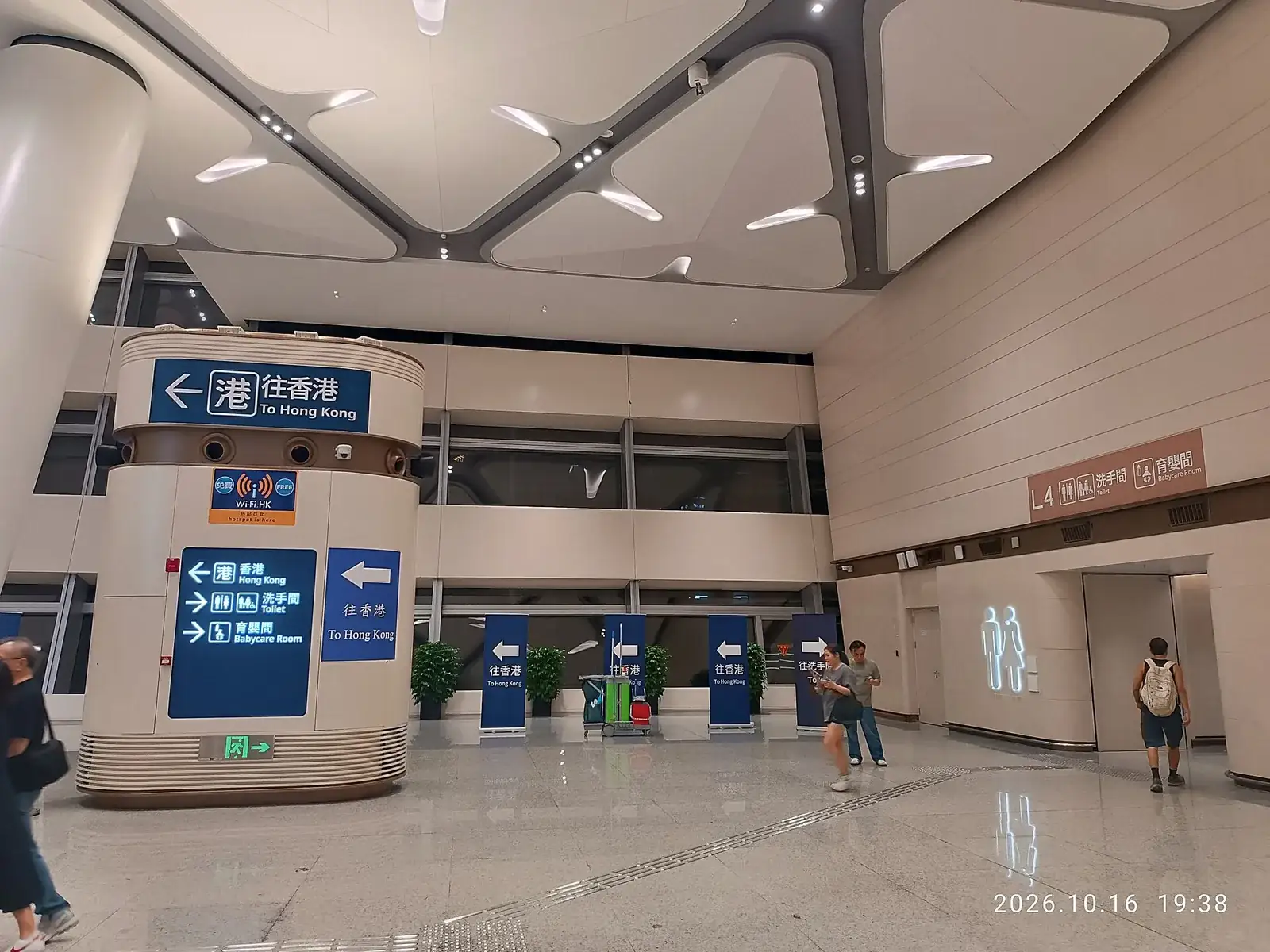
New Huanggang Port opened on 12 October, and on 23 October Sing Tao Headline reported its first undeclared-dollar case: on 13 October, the day after opening, a woman leaving for Hong Kong was stopped by Huanggang Customs with US$35,000 in cash in her handbag. Both Hong Kong and Shenzhen set limits above which you must declare cash, and people who cross often face lower limits on foreign cash. Check both sides’ rules before you cross by cross-border car. Book a Hong Kong to Shenzhen private car transfer; from Macau, see our Macau to Shenzhen private car transfer.
Declaration thresholds
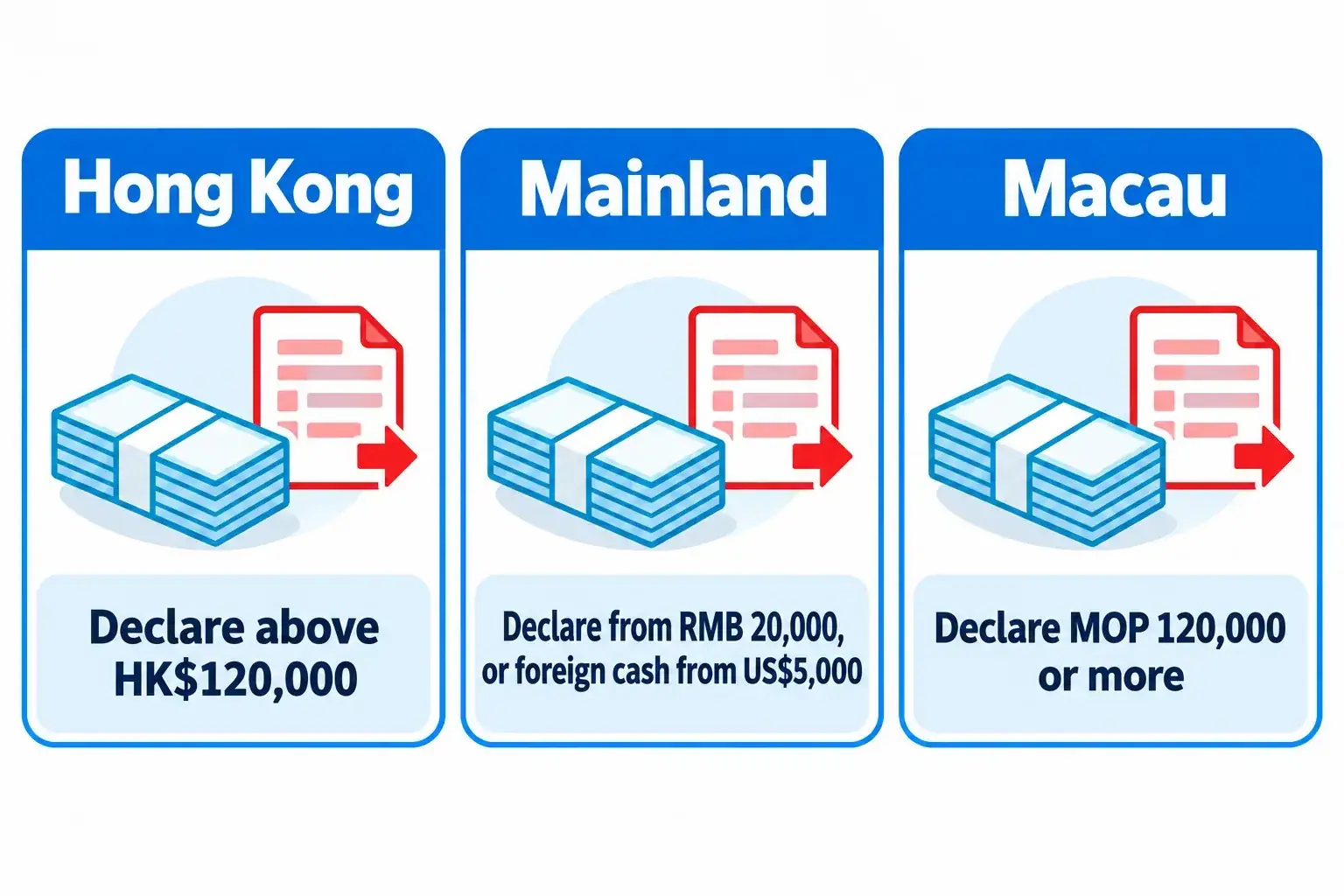
As of 27 October 2026, the customs authorities publish:
| Where | Threshold | How to declare |
|---|---|---|
| Hong Kong (arriving) | Currency and bearer negotiable instruments worth more than HK$120,000 in total | At a specified control point, declare to Customs through the Red Channel |
| Hong Kong (leaving) | Same | Answer truthfully when a Customs officer asks, and declare if you carry that much |
| Mainland (both ways) | RMB 20,000 or more in cash, or foreign cash worth US$5,000 or more | Red Channel |
| Macau (arriving) | Cash and bearer instruments worth MOP 120,000 or more | Fill in the form and use the Red Channel; when leaving, declare truthfully if asked |
Note the wording: Hong Kong is “more than” HK$120,000, while Macau is “MOP 120,000 or more”.
Hong Kong: what counts towards HK$120,000
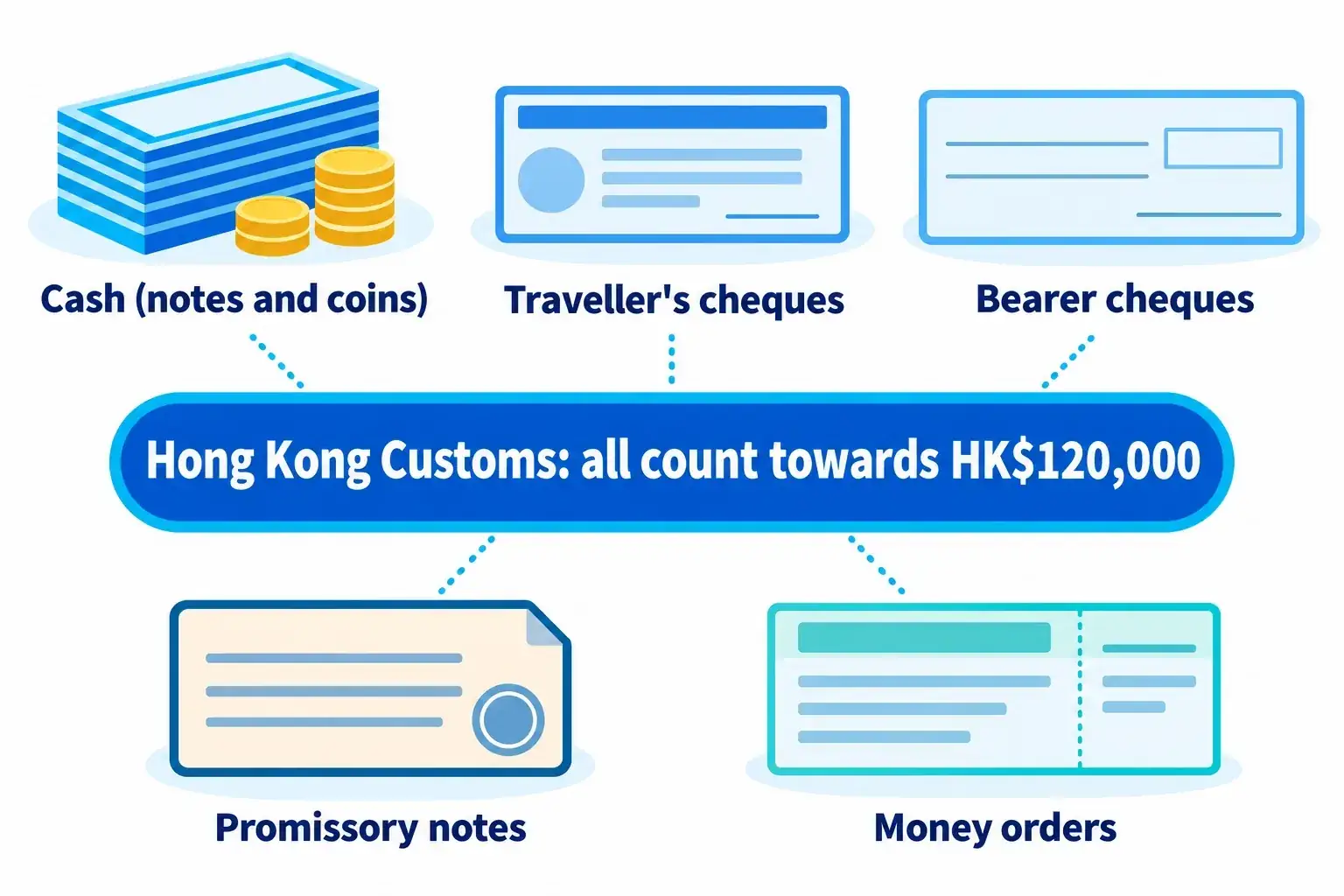
Under the Physical Currency and Bearer Negotiable Instruments Ordinance (Cap. 629), Hong Kong Customs counts:
- Cash. Notes and coins that are legal tender anywhere.
- Bearer negotiable instruments. Traveller’s cheques, bearer cheques, promissory notes, bearer bonds, money orders and postal orders.
- Foreign currency. Valued at the Hong Kong Association of Banks’ opening indicative selling rate for the day. You can write the amount in its original currency; no need to convert it.
- Children. An adult travelling with someone under 16 must declare or disclose for them if the adult knows they carry that much.
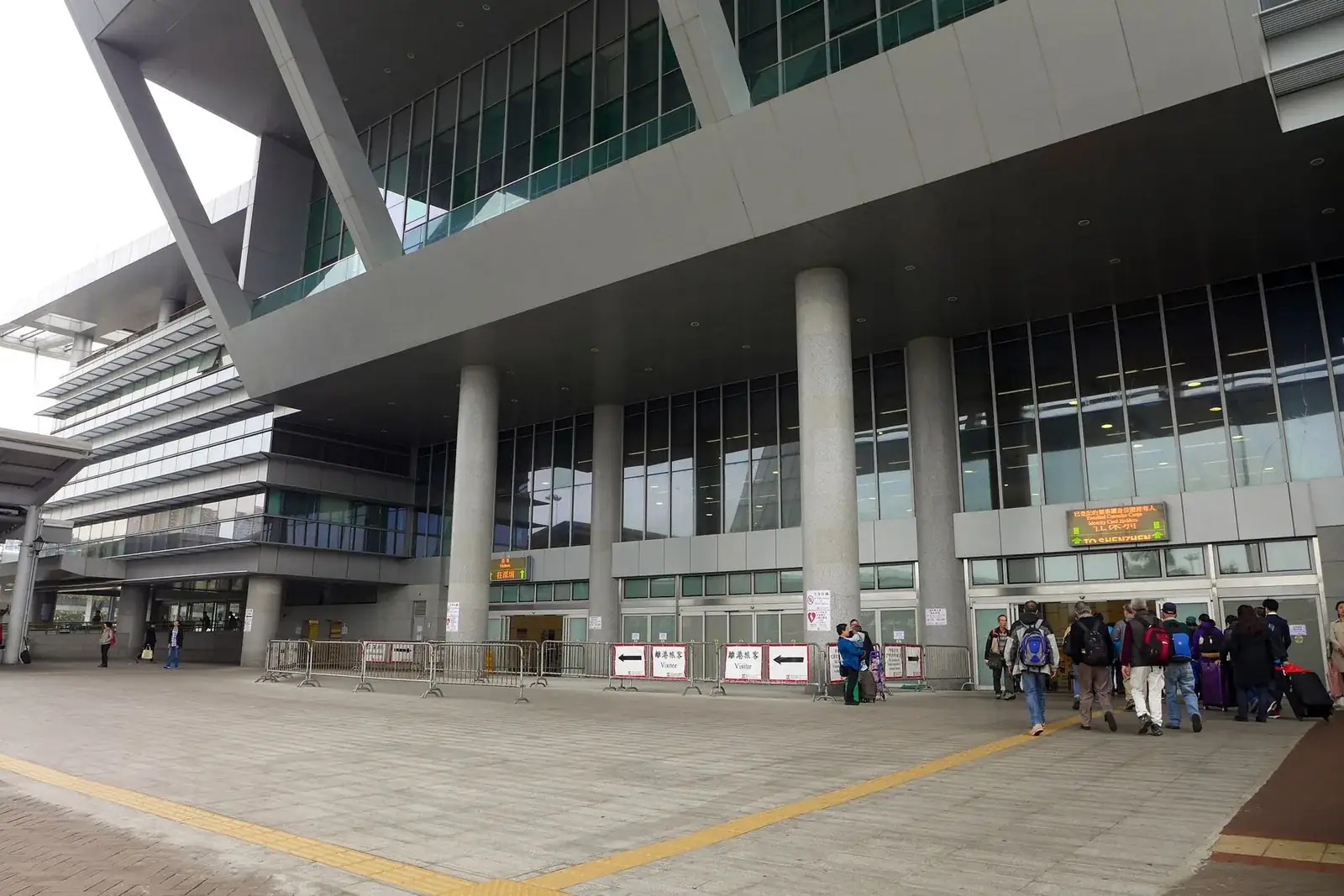
Specified control points include the Hong Kong port areas of Shenzhen Bay and Huanggang, Heung Yuen Wai and the Hong Kong Port of the Hong Kong–Zhuhai–Macao Bridge.
How to declare. Fill in the e-form on the Customs website beforehand and show the QR code, or take a paper form at the Red Channel in the arrival hall.
Penalties. A first-time offender with no money-laundering or terrorist-financing conviction, and no suspicion that the money comes from crime, may pay HK$2,000 to settle the matter. Otherwise the maximum is a HK$500,000 fine and two years in prison.
Mainland: renminbi and foreign cash counted separately
The GACC passenger guide lists RMB 20,000 or more in cash, or foreign cash worth US$5,000 or more, as items to declare at the Red Channel. Not declaring can lead to a penalty.
For taking foreign cash out, the 2003 SAFE and GACC interim measures set these tiers:
| Foreign cash leaving the mainland (no entry declaration, or above it) | Requirement |
|---|---|
| Up to US$5,000 | Released by customs |
| US$5,000 to US$10,000 | A permit to carry foreign exchange out, issued by a bank |
| Over US$10,000 | Not allowed in principle; special cases need a permit from SAFE |
Foreign cash you declared when you came in can go back out up to the declared amount. Under the same measures, customs does not currently control foreign traveller’s cheques or drafts, unlike Hong Kong.
Frequent crossers: lower limits
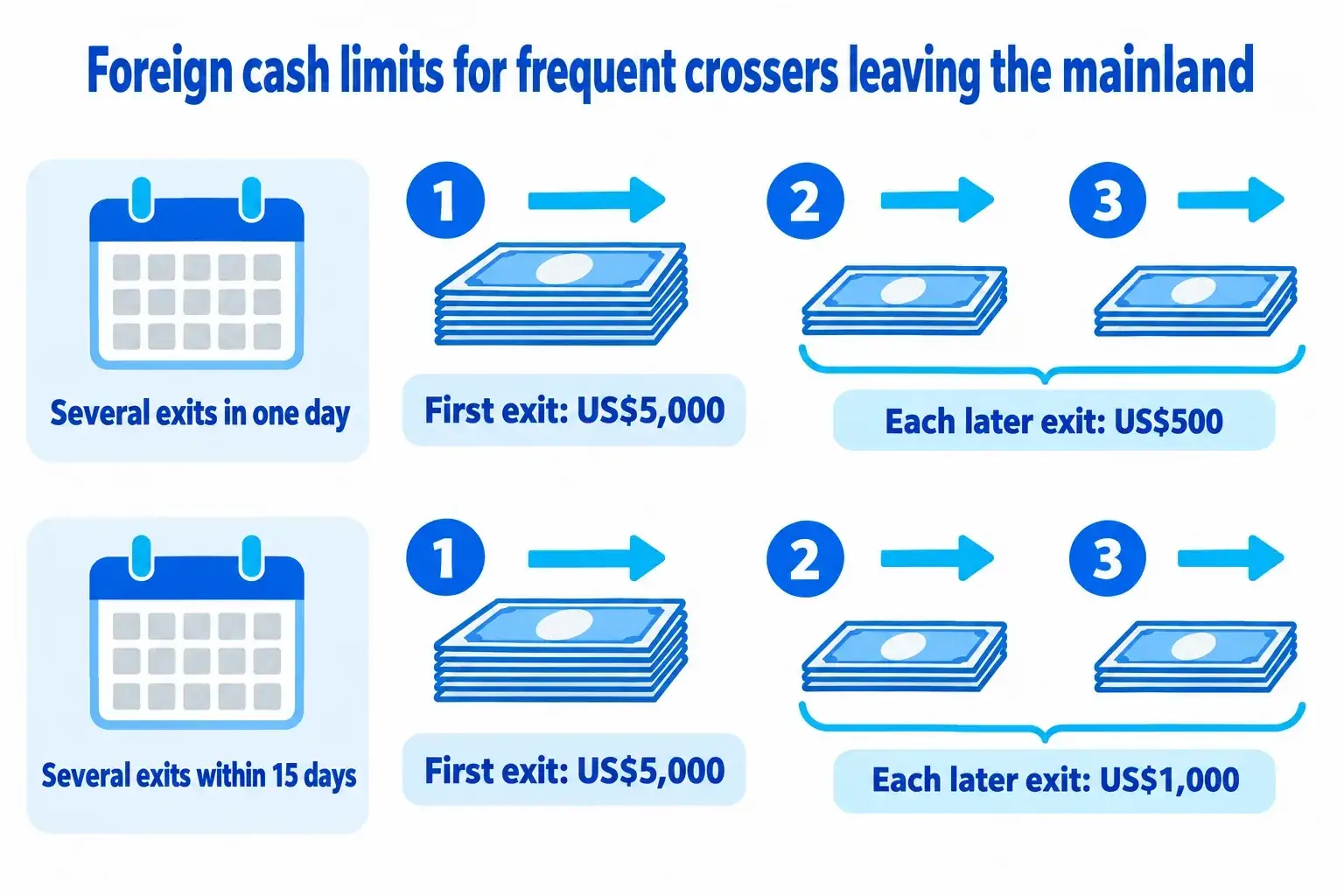
The same measures set lower limits for people who cross often:
- Several crossings in one day. Up to US$5,000 in foreign cash on the first exit, then up to US$500 on each later exit.
- More than one crossing within 15 days. Up to US$5,000 on the first exit, then up to US$1,000 on each later exit.
- Above the limit. Customs does not release it.
- Declaring on entry. The measures also require frequent crossers to declare foreign cash in writing when they enter; exits are checked against their latest entry declaration.
Sing Tao quoted a customs reminder that cash over the limit and not declared may be confiscated or fined. This matters if you commute to Shenzhen daily or travel north often.
New Huanggang: passengers clear in the hall
The Hong Kong government announced on 9 October that New Huanggang Port would open on 12 October:
- Drivers. Complete both sides’ formalities at the self-service kiosk in the one-stop lanes. Departing vehicles first pass a customs booth for a risk assessment.
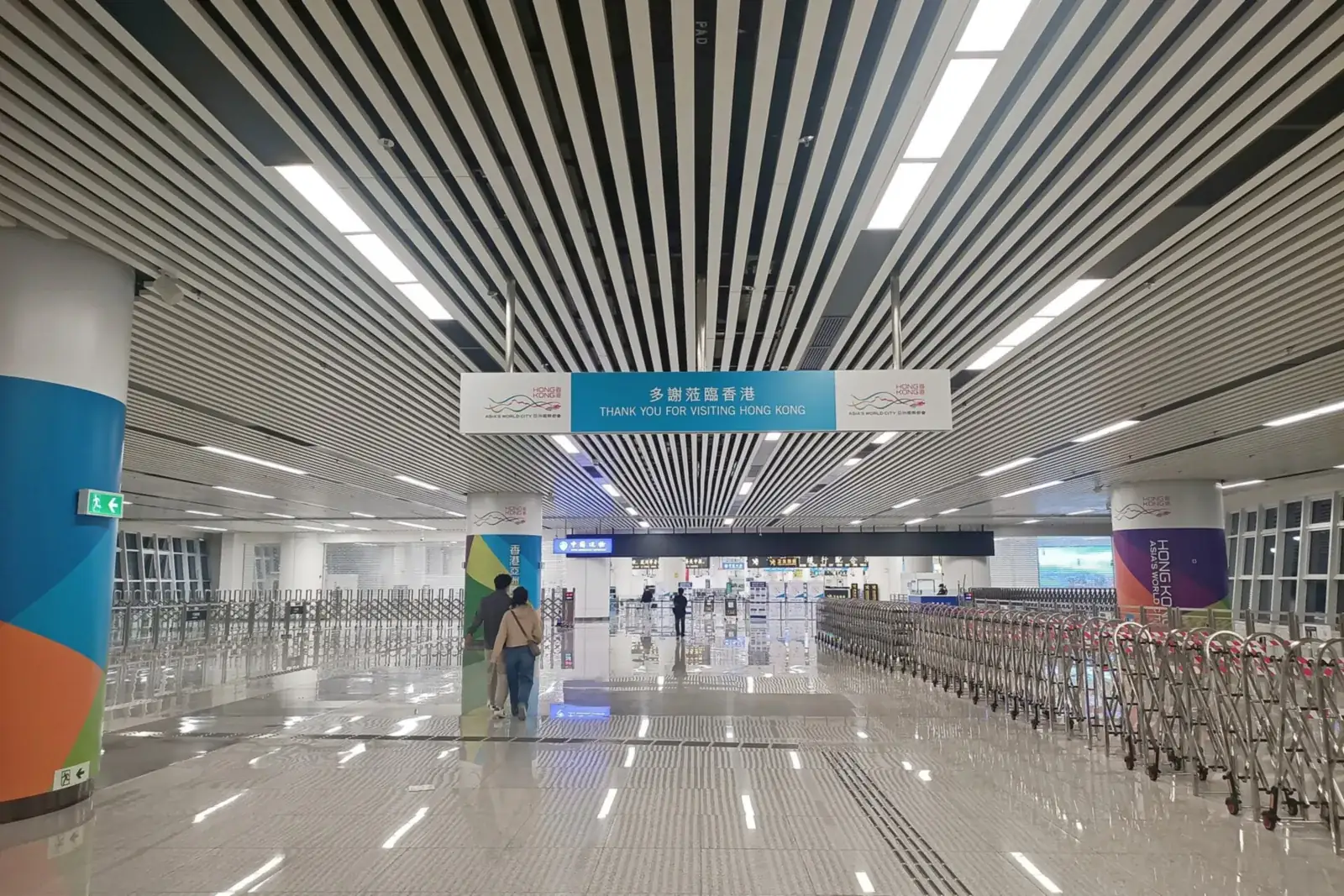
- Passengers. People and cars are cleared separately: passengers in cross-border private cars normally get out at the drop-off area and take their luggage to the passenger clearance hall for immigration clearance.
RTHK reported that on 24 October Commissioner of Customs and Excise Chan Tsz-tat said the new port uses active millimetre-wave detection and mobile X-ray vehicles, and that at peak times cars can end up waiting for their passengers, who must clear in the hall.
Crossing in our cars
- Declaring. It’s the passenger’s own responsibility. If you have something to declare, tell the driver at the crossing.
- Crossings. We choose Shenzhen Bay, Huanggang or Liantang by your pickup point, the time and traffic on the day.
- Clearance. At Shenzhen Bay, Hong Kong officers usually check documents in the car; on the Shenzhen side passengers walk through the hall and the driver picks them up. At New Huanggang passengers clear in the passenger clearance hall. Where exactly you declare depends on on-site arrangements and customs officers’ directions.
- Luggage. We carry passengers’ own luggage only, not commercial goods.
For tobacco, alcohol and duty-free limits, see customs when crossing by car; for documents, see documents to carry when crossing by car.
Before you go
- Add up the cash and instruments you and any children are carrying
- Convert foreign currency at the day’s rate and check it against each threshold
- If you cross often, remember the one-day and 15-day foreign cash limits
- If you need to declare in Hong Kong, fill in the Customs e-form in advance
- Book a Hong Kong to Shenzhen private car transfer with your pickup point and time
For more on crossing, see crossing the border by car.
How CROSSBAY can help
| Route | Crossing | 7-seater, one way, from |
|---|---|---|
| Hong Kong ⇄ Shenzhenapprox. 1 – 1.5 hrs | Shenzhen Bay / Huanggang / Liantang | HK$825 |
| Macau ⇄ Shenzhenabout 85 min driving (plus border clearance) | Barrier Gate (Gongbei) | HK$1,958 |
- One fixed price for the whole car, the same for one passenger or six, with no meter and nothing extra for traffic.
- Tolls, border and parking fees, fuel and the driver are included.
- Border queues and official checks never count as waiting; if you walk through the hall, the driver waits at the exit with 45 minutes free.
Starting fares for a 7-seat Alphard / Vellfire; other cars, night trips and extras are in the service rules. Your written confirmation sets the final price.
Questions
How much cash can I bring into Hong Kong from Shenzhen without declaring?
As of 27 October 2026, Hong Kong Customs says that if you arrive at a specified control point with currency and bearer negotiable instruments worth more than HK$120,000 in total, you must declare them to a Customs officer through the Red Channel. Shenzhen Bay, New Huanggang and Heung Yuen Wai are all specified control points. Foreign currency is valued at the Hong Kong Association of Banks' opening indicative rate for the day.
How much cash can I take into Shenzhen without declaring?
The General Administration of Customs (GACC) passenger guide lists RMB 20,000 or more in cash, or foreign cash worth US$5,000 or more, as Red Channel items. Not declaring them can lead to a penalty. As of 27 October 2026; check the latest customs notices.
Are there lower limits for people who cross often?
Yes. Under the 2003 SAFE and GACC interim measures on carrying foreign cash, people crossing several times in one day may take out up to US$5,000 on the first exit and up to US$500 on each later exit. People crossing more than once within 15 days may take up to US$5,000 on the first exit and up to US$1,000 on each later exit.
Where do I declare when crossing by private car?
Declaring is the passenger's own responsibility; if you have something to declare, tell the driver at the crossing. New Huanggang clears people and cars separately: the government says passengers in cross-border private cars normally get out at the drop-off area and take their luggage to the passenger clearance hall for immigration clearance. Where exactly you declare depends on on-site arrangements and customs officers' directions.
References
- Currency and Bearer Negotiable InstrumentsCustoms and Excise Department, HKSAR · viewed 2026-10-27
- Specified Control PointsCustoms and Excise Department, HKSAR · viewed 2026-10-27
- Red and Green Channel SystemCustoms and Excise Department, HKSAR · viewed 2026-10-27
- Customs Clearance Guide for International PassengersGeneral Administration of Customs of China · viewed 2026-10-27
- 国家外汇管理局 海关总署关于印发《携带外币现钞出入境管理暂行办法》的通知 (Hui Fa [2003] No. 102)State Administration of Foreign Exchange · 2003-08-28
- 監管攜帶現金和無記名可轉讓票據出入境 (Cash and bearer instruments)Macao Customs Service · viewed 2026-10-27
- 跨部門協作確保新舊皇崗口岸無縫銜接 (New Huanggang Port arrangements)HKSAR Government press release · 2026-10-09
- 新皇崗口岸|開通首案!女客手袋藏3.5萬未申報美元赴港被截Sing Tao Headline · 2026-10-23
- 陳子達:過境人次持續上升 海關引入更多精準儀器檢查旅客和貨物RTHK · 2026-10-24
Border arrangements, timetables and rules can change at short notice; check the latest official notices before you travel. Spotted an error? Tell us
Image credits
- Cover: the To Hong Kong hall, New Huanggang PortBUGEE TIANM (Wikimedia Commons) · CC0
- Shenzhen Bay Port, Hong Kong entranceWpcpey (Wikimedia Commons) · CC BY-SA 4.0
- Departure hall, Heung Yuen Wai Control Point写意人生 (Wikimedia Commons) · CC BY-SA 4.0
- 3 illustrations (declaration thresholds, what Hong Kong counts, frequent-crosser limits)CROSSBAY editorial team · Illustration made with AI tools